


Metallkat Monolith Metal Substrate Catalyst
Metallkat Monolith Metal Substrate Catalyst
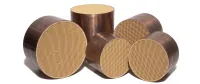
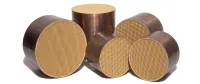
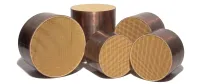
Full control over exhaust flow and filter performance
With our separate monoliths for welding-in, you determine the flow characteristics and cleaning efficiency of your exhaust system yourself. Depending on your performance goals, engine displacement, and intended use, we offer a precise selection of different performance levels:
100-cell monolith (100 cpsi): Maximum flow, minimum backpressure. This variant is uncompromisingly designed for maximum exhaust flow—ideal for pure motorsport projects, extreme performance upgrades, and race cars.
200-cell monolith (200 cpsi): The perfect all-rounder for performance vehicles. It offers excellent exhaust gas throughput to relieve the turbocharger while maintaining high chemical conversion efficiency, ensuring compliance with emission limits even with a clean engine tune.
300-cell monolith (300 cpsi): Optimal filtering performance with significantly reduced backpressure compared to restrictive OEM ceramic catalysts. The ideal choice for modern vehicles with sensitive sensor systems (post-catalyst diagnostic probe) to avoid error messages in the cockpit while still providing thermal relief.
Quality over cell count: The secret of the coating
A common misconception in the tuning industry is that the number of cpsi alone determines cleaning performance and passing the emissions test. In practice, however, the situation is different: It is not the sheer number of cells that is decisive, but rather the high quality and density of their precious metal coating.
The physical principle: The fewer cells a monolith has per square inch (e.g., a 100-cell compared to a 300-cell), the larger the individual channels. This achieves the desired effect: flow increases dramatically and backpressure drops to near zero.
The technical challenge: Since the exhaust gas has less direct contact area per second with the matrix due to the larger channels and higher flow rate, the chemical reaction must proceed all the more quickly and efficiently.
The solution through high-end quality: The lower the number of cells, the higher the quality and concentration of the coating made of the precious metals platinum, palladium, and rhodium (the so-called washcoat) must be.
Our premium monoliths compensate for the reduced cell structure with an extremely dense and heat-resistant precious metal coating. This is the only way to guarantee that reliable pollutant conversion takes place despite the maximum flow rate. The result: Optimal flow for maximum engine performance, while still reliably meeting the required exhaust emission limits.