


Turbo manifold
An innovation for high-performance engines
The turbo manifold, an integral part of a turbocharged engine, plays a crucial role in increasing engine performance and thus improving the driving experience. The choice of materials and the type of construction are crucial to the overall performance and reliability of the system. The technology described here is not only relevant in the field of motorsport, but also has an important role to play in the world of production vehicles.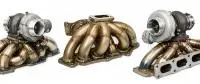







Materials and Designs
As mentioned earlier, exhaust manifolds are available in various materials. Cast exhaust manifolds are the preferred option for production engines, while in the tuning sector, various metals such as cast nickel, cast steel, steel, and stainless steel are used. The choice of material depends on various factors, including the desired durability, the expected temperatures, and the specific requirements of the respective engine.
Cast steel is characterized by its resistance to high temperatures and is therefore particularly durable. Cast nickel is more suitable for short-term use and may deform under intense heat. Stainless steel offers an excellent balance between strength and flexibility and is therefore particularly popular in motorsports and street tuning.
Applications
Turbo manifolds are used in a variety of applications, ranging from race cars and high-performance sports cars to everyday vehicles. Manufacturers offer various models specifically tailored to the needs of each car brand. Available models include turbo manifolds for Audi/VW, BMW, Opel, and many other brands.
Upgrade Exhaust Manifolds
In addition to standard models, some manufacturers also offer aftermarket exhaust manifolds that have been specifically designed to boost engine performance and efficiency. These exhaust manifolds can often be installed as direct bolt-ons, making them an attractive option for those looking for simple ways to increase their vehicle’s performance.
Selection and Advice
Choosing the right turbo manifold can be complicated, especially if you don’t know exactly which model is best suited for your specific vehicle. Many suppliers therefore offer specialized consultation, either via email or directly by phone. This allows customers to receive expert assistance and ensure they select the right turbo manifold for their needs.
Technical Aspects and Development
The turbo manifold is more than just a simple connecting piece between the cylinder head and the turbocharger. Its design and the materials used contribute significantly to improving exhaust technology and, consequently, to optimizing performance.
Flow Optimization: In the tuning sector, exhaust manifolds are often equipped with larger channels and flow-optimized designs. These improvements ensure a more efficient exhaust flow, which boosts the turbocharger’s performance and, consequently, the engine’s overall power.
Thermal Management: A well-designed turbo manifold must be able to efficiently dissipate the high temperatures generated during combustion. This prevents other components from overheating and extends the system’s service life.
Sustainability and Environmental Considerations: Modern turbo manifolds also contribute to reducing emissions. Efficient exhaust management helps reduce the vehicle’s environmental impact, which aligns with global efforts to reduce the carbon footprint.
Customer Focus: Customized Solutions
The ability to manufacture turbo manifolds to customer specifications demonstrates how committed the industry is to meeting the individual needs of each vehicle and its owner. It is no longer just a one-size-fits-all solution; rather, manufacturers strive to offer specific solutions for different vehicle types and purposes.
The Future of Turbo Manifolds
The continuous advancement of turbocharger technology demonstrates that this is a sector in a state of constant change. With the introduction of electric vehicles and hybrid technologies, the role of exhaust manifolds in the automotive sector could be further transformed. Manufacturers are investing in research and development to create exhaust manifolds that are not only high-performance but also environmentally friendly.
Final Thoughts
The turbo manifold is a fascinating example of how technical innovation and custom design come together to make modern vehicles more powerful, efficient, and sustainable. From materials and construction to applications in various vehicle types and the latest technological developments, the turbo manifold offers insight into the complexity and diversity of automotive engineering.
Through expertise and the use of innovative technologies, the industry ensures that turbocharger technology remains relevant in the future and contributes to the further development of the entire automotive industry. The turbocharger is more than just a simple component; it is a symbol of technical achievement and the vision of a sustainable, high-performance future on roads worldwide.
Conclusion
The turbo manifold is a crucial component in modern turbocharged engines. By selecting the right material and design, significant performance gains can be achieved. Whether in professional motorsports or everyday use, the importance of turbo manifolds cannot be overlooked. With ongoing development and innovation in this field, turbo manifolds are certainly an exciting topic for any car enthusiast or professional who wants to stay at the forefront of vehicle performance.