


Pump Kit TFSI
TFSI Pump Kit
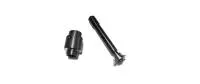
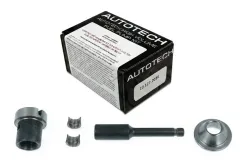
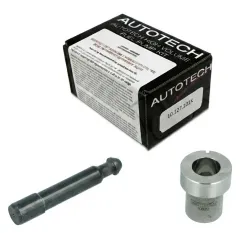
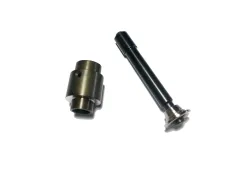
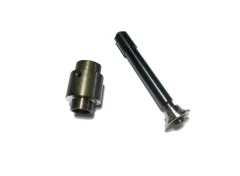
Upgrade gasoline pump tappets for TFSI engines – Stable fuel supply in tuning
When increasing the performance of VAG direct-injection engines (especially the 2.0 TFSI EA113 engines with timing belt-driven high-pressure pump), the factory fuel system quickly reaches its mechanical delivery limits. To cover the increased fuel demand during software or turbocharger upgrades, an upgrade gasoline pump tappet or a reinforced piston kit for the high-pressure fuel pump (HPFP) is absolutely required. These components increase the pump’s displacement volume per revolution and ensure the required system pressure in the rail tube.
The risk of fuel shortage in tuned TFSI engines
If a modified TFSI engine receives too little fuel under full load, the pressure in the high-pressure rail (target value often over 110 to 130 bar depending on setup) drops. This leads to a leaning of the combustion mixture (lambda value rises into the impermissible range). The physical and mechanical consequences of an insufficient fuel supply are serious:
Extreme exhaust gas temperature increase (EGT): Missing fuel reduces the internal cooling of the cylinders through the heat of vaporization of the gasoline. Combustion temperatures rise abruptly.
Knocking combustion (detonation): The leaned-out mixture tends toward uncontrolled self-ignition, which exerts extreme pressure peaks on pistons and connecting rods.
Thermal engine damage: Long-term consequence or acute result of fuel shortage are melted piston crowns, burned exhaust valves, as well as cracks in the exhaust housing of the turbocharger.
Signs of insufficient fuel pressure are mostly noticeable power drops (fuel cuts) in the mid-range rpm area as well as corresponding fault memory entries regarding rail pressure.
In the 2.0 TFSI engines (especially the EA113 series with timing belt, such as in the Golf 5 GTI, Edition 30, Golf 6 R, Audi S3 8P), the necessity of the upgrade can be determined quite precisely based on the targeted power and software stage:
Up to approx. 260–270 hp (stock / Stage 1): With a pure optimization of the stock components, the delivery volume of the original high-pressure pump is generally sufficient, provided the mechanical components are intact.
From approx. 270–280 hp / > 380 Nm (from Stage 2 / modifications to downpipe & intake): This is the critical limit. The upgrade kit is urgently recommended here. To maintain the higher boost pressure in the mid-range rpm area, tuners request more fuel. The stock pump often can no longer mechanically keep the rail pressure (usually from 110 bar upward) stable, which leads to the typical “fuel cuts” (power drops).
From 300+ hp (Stage 3 / upgrade turbocharger such as K04 or larger): From this stage, installation of the upgrade tappet is absolutely required. Without the larger piston volume (such as from Autotech), the engine immediately runs lean in the upper load range, which can result in the fatal engine damage described.
Important technical note for the EA888 generation (e.g. Golf 6 GTI with chain): The Bosch high-pressure pump of the newer generation installed there is somewhat more capable from the factory and is often sufficient up to approx. 330–340 hp. In the older EA113 engines with timing belt (recognizable by the engine cover with integrated air filter), however, the pump is the absolute bottleneck and must be upgraded significantly earlier.
Autotech – The premium manufacturer for HPFP upgrades
In the area of high-pressure pump components, the US manufacturer Autotech is considered the undisputed industry standard. The Autotech upgrade piston kit is characterized by extremely low manufacturing tolerances and a high-strength plasma nitride coating. By enlarging the piston diameter, the kit enables an increase in fuel volume of over 50% compared to stock, without forcing the mechanical load on the camshaft through excessive stroke. The precision of Autotech also minimizes the risk of internal fuel leakages, which could dilute the engine oil.
Installation overview: Installing the upgrade tappet
Installing the enlarged piston requires extreme cleanliness, since even the smallest dirt particles can damage the minimal manufacturing tolerances of the high-pressure pump. The workflow is divided into the following steps:
Relieve pressure system: Before opening the system, the fuse of the in-tank fuel pump is pulled and the engine is started until it stalls. This reduces the dangerous residual pressure in the high-pressure rail. Afterwards, the battery is disconnected.
Removal of the high-pressure pump: After loosening the electrical connectors as well as the rigid and flexible fuel lines, the fastening screws of the pump are loosened crosswise. The pump is then carefully pulled out of the housing seat.
Component replacement in cleanroom environment: The old bucket tappet (cam follower) is removed and the camshaft running surface is checked for wear. After disassembling the OEM pump, the stock piston is removed. The Autotech upgrade kit is precisely inserted into the guide using fresh engine oil or assembly paste (MoS2).
Finalization and system filling: A new bucket tappet is inserted, the modified pump is mounted with new sealing rings, and the screws are fixed with the specified torque. Before the first engine start, the ignition is activated several times for a few seconds in order to fully flood and bleed the system via the low-pressure pump.