


BOV - Blow-off Valves
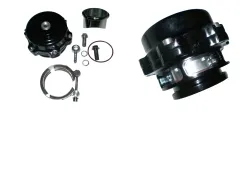
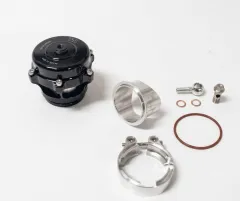
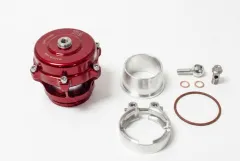
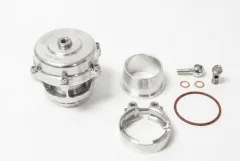
Blow-Off Valves (Pop-Off) for Turbochargers: Function, Selection & Technology
A high-performance turbocharger requires equally precise boost pressure control. In addition to the wastegate on the exhaust side, the blow-off valve (often colloquially referred to as a pop-off valve or boost bypass valve) is the central component on the intake side. It relieves pressure in the system during load changes and protects sensitive components from damage.
Function: Why is a blow-off valve essential?
During acceleration, the turbocharger builds up high boost pressure in the intake tract. If you suddenly lift off the throttle (e. g. when shifting gears), the throttle valve closes. The flowing air mass collides with the closed throttle valve, creating a massive pressure wave.
Without a functioning blow-off valve, this pressure wave would hit the rotating compressor wheel of the turbocharger unchecked. The result:
Compressor surge: The turbocharger is abruptly decelerated, which places extreme mechanical stress on the bearings.
Increased turbo lag: Since the rotating assembly is slowed down, boost pressure must be painstakingly rebuilt when you accelerate again.
A high-quality blow-off valve opens within milliseconds when intake manifold vacuum occurs, vents the excess pressure, and maintains the turbocharger’s speed for optimal responsiveness.
Open vs. closed systems (blow-off vs. bypass)
When selecting the system architecture, a fundamental distinction is made between two variants:
Open system (blow-off / pop-off): Excess boost pressure is released directly into the atmosphere. This produces the characteristic hissing sound. Important for vehicles with a mass air flow sensor (MAF): Since the air has already been measured, an open valve can cause the engine to run rich for a short time without a software adjustment.
Closed system (recirculating): The air is directed back into the intake tract (before the turbocharger inlet). This system operates quietly and is often the technically cleaner solution for modern, sensitive engine control systems.
Choosing the right hardware: TiAL vs. Turbo-Parts
To meet the needs of different budgets and project goals, we carry both high-end components and optimized in-house developments:
TiAL Sport – The premium benchmark in motorsports
The valves from TiAL Sport (such as the legendary TiAL Q 50mm) are regarded worldwide as the industry standard in high-end tuning and motorsports. They are characterized by extremely tight manufacturing tolerances, maximum material quality (6061-T6 aluminum), and exceptionally high thermal resistance. Anyone building an uncompromising high-end project and relying on absolute brand quality chooses the original.
Turbo-Parts – The rock-solid, cost-effective alternative
For performance-oriented street vehicles and clever custom builds, we have developed the Turbo-Parts own brand as a technically equivalent but economically optimized alternative. Our valves are based on proven design principles, are also fully CNC-machined, and offer absolutely reliable valve operation as well as precise response characteristics. They eliminate the premium price tag of established premium brands, thereby offering the optimal value for your project.
Technical tuning: Choosing the right valve spring
The fine-tuning of a blow-off valve is not based on maximum boost pressure, but on the intake manifold vacuum at idle. The installed spring must be strong enough to keep the valve closed at idle (to prevent unfiltered false air from being drawn in), but soft enough to open immediately if the throttle valve closes suddenly. For both TiAL and Turbo-Parts valves, we offer a wide range of tuning springs to precisely adapt the system to your engine concept.