


Garrett GTX turbocharger
Garrett GTX Turbocharger
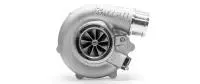
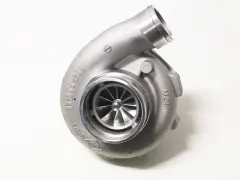

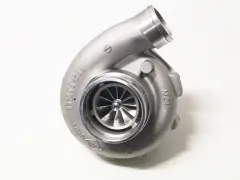


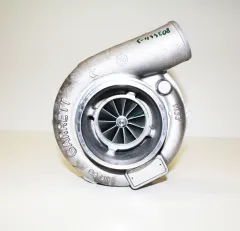
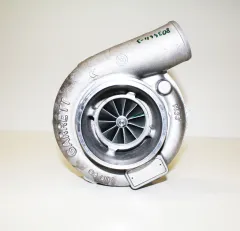
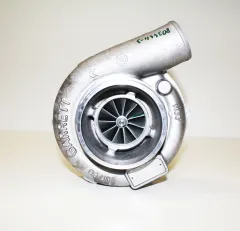
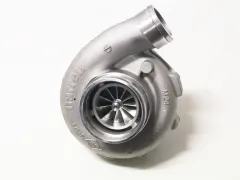
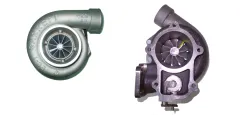
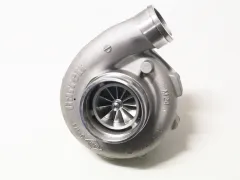
Garrett GTX Series: Technical Advancements and Performance Features
Garrett ’ GTX-series turbochargers are based on the proven core assembly of the classic GT series but have been specifically optimized for higher air mass flow rates and extreme boost pressures. The key technological feature of the GTX generation lies in the evolutionary redesign of the compressor side. Through the use of more modern manufacturing processes and modified blade geometries, the GTX series shifts the pump limit upward in the compressor performance map. This enables significantly higher boost pressures while maintaining stable efficiency, which is a decisive advantage, particularly for high-performance turbocharged engines operating in the peak power range.
Design Upgrades and Differentiation from the GT Series
While the exhaust side largely retains the proven robustness of the GT series, the GTX series turbochargers (Gen. 1 and Gen. 2) feature significant mechanical and aerodynamic modifications:
Forged-milled aluminum compressor impellers (billet): Unlike the cast compressor impellers of the GT series, GTX compressor impellers are milled from high-strength special-grade aluminum. This allows for extremely thin blade walls while maintaining higher structural stability.
Optimized aero-geometry (11-blade & point-milling design): The modified blade design (implemented as an 11-full-blade design or using the point-milling process, depending on the generation) achieves a significantly higher pressure ratio. With the same housing size, the supercharger delivers noticeably more air mass than a comparable GT supercharger.
Upgrade to Ceramic Ball Bearings (Gen. II): While the GT series uses classic steel balls, the second-generation GTX models feature optimized ceramic ball bearings. This further reduces friction losses in the cylinder head assembly (CHRA), shortens the supercharger’s ramp-up time, and measurably optimizes transient response once again.
Preparation for RPM Sensing: The GTX-series compressor housings feature a blind bore cast in as standard. A mechanical speed sensor can be retrofitted here without complex milling work to precisely monitor the supercharger speed during operation and prevent overspeeding.
Important installation note regarding oil pressure regulation: Due to their highly efficient ball bearings, the GTX housing assemblies also require a strict limitation of the oil flow rate. To protect the piston-ring-style seals against overpressure, it is essential to install a suitable oil restrictor (typically with a precise 0.9 mm bore) in the oil inlet.
Technical Generation Comparison: GT vs. GTX and G Series
For optimal system tuning, the following matrix shows the technological positioning of the GTX series between the base GT series and the high-end G series:
| Feature / Component | Garrett GT Series (Base) | Garrett GTX Series (Gen. 1 & 2) | Garrett G Series (Current Generation) |
| Compressor Impeller Manufacturing | Cast aluminum wheel, conventional geometry. | Forged & CNC-machined (billet) for maximum airflow. | Forged & CNC-milled, completely redesigned high-flow aero. |
| Mounting (Housing Assembly) | Double ball bearing with steel balls. | Double ball bearings (Gen. II with wear-resistant ceramic balls). | Ultra-compact housing assembly with high-performance ceramic bearings. |
| RPM sensing | Not pre-tuned. | Housing mechanically prepared for sensor installation. | Integrated port for real-time RPM monitoring, factory-installed. |
| Max. Exhaust Gas Temperature | Up to approx. 950 °C (Inconel turbine wheel). | Up to approx. 950 °C (Inconel / advanced alloys). | Extreme temperature range up to 1050 °C thanks to a highly advanced Mar-M alloy. |
The Garrett ’s GTX Series is the ideal upgrade when the geometric dimensions of an existing GT setup (e.g., manifold flange, downpipe connection, and space constraints in the engine compartment) need to be maintained, but a significant increase in performance via boost pressure is required. It bridges the gap between the cost-effective GT base model and the extremely compact G Series—which can handle even higher thermal loads—by extracting maximum performance from the classic housing geometries.